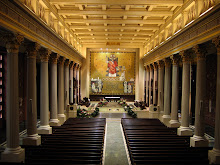
Word reached me late this afternoon that Sacred Heart Radio's attempts at a winning bid for WHSS in Hamilton have proven successful! Thanks to all who offered prayers on behalf of the radio station and to all who made pledges to help make this a reality. While there is still much work to do, it looks as good that Catholic radio continues it's expansion, here into Hamilton, Ohio.
- Posted using BlogPress from my iPhone
Wednesday, August 25, 2010

Prayer Bleg
As regular readers of this blog might recognize, I appear on Sacred Heart Radio somewhat frequently. During the Year for Priests, we discussed all of Pope John Paul II's Letters to Priests. I regularly have announcements and blurbs on the station for things in the Vocation Office, too.
As a point of clarification, I also serve on the Board of Directors for the Station, and in that role, I have a prayer favor to ask.
Today, we are bidding on a station in the Hamilton, Ohio, area. (Just north of Cincinnati.) We are after the former Hamilton City Schools station, and apparently there is some competition in the area. Please pray for a successful bid and auction, that if it is God's Will, we might be able to purchase the station with the amount we have pledged and collected from area donors.
As a point of clarification, I also serve on the Board of Directors for the Station, and in that role, I have a prayer favor to ask.
Today, we are bidding on a station in the Hamilton, Ohio, area. (Just north of Cincinnati.) We are after the former Hamilton City Schools station, and apparently there is some competition in the area. Please pray for a successful bid and auction, that if it is God's Will, we might be able to purchase the station with the amount we have pledged and collected from area donors.
Wednesday, August 18, 2010
To know the Shepherd
Today's Psalm, Psalm 23: The Lord is my Shepherd...., reminded me of a story.
Both Orson Wells and Archbishop Fulton J. Sheen were at a gathering. The host, recognizing two of the greatest orators to be in his midst, proposed a contest. Each of the two would recite Psalm 23, and the crowd would testify who won.
Orson Wells came first. He read with passion, zeal, power. His booming voice filled the room, holding the crowd in rapt attention. As he completed the last line, applause erupted.
Next, Archbishop Sheen stepped forward. He recited the Psalm from memory, reading it quietly, prayerfully, meditatively. Those in attention strained to hear his voice as he completed the last few lines. When he finished, silence.
The host turned to his wife: Ahh, one knew the Psalm, the other knew the Shepherd.
Are we in touch with the Shepherd of our souls, the author of the Psalm?
Both Orson Wells and Archbishop Fulton J. Sheen were at a gathering. The host, recognizing two of the greatest orators to be in his midst, proposed a contest. Each of the two would recite Psalm 23, and the crowd would testify who won.
Orson Wells came first. He read with passion, zeal, power. His booming voice filled the room, holding the crowd in rapt attention. As he completed the last line, applause erupted.
Next, Archbishop Sheen stepped forward. He recited the Psalm from memory, reading it quietly, prayerfully, meditatively. Those in attention strained to hear his voice as he completed the last few lines. When he finished, silence.
The host turned to his wife: Ahh, one knew the Psalm, the other knew the Shepherd.
Are we in touch with the Shepherd of our souls, the author of the Psalm?
Monday, August 16, 2010
Where do Priests Come From?

"Do they grow on a farm? No. Are they made in a factory? No. Priests come from God's people. They once were young boys, just like you.
"As children, some of these boys played baseball. Some of them climbed trees. Some of them were altar servers, helping out at Mass. They may have dreamed of becoming an astronaut, a doctor or a fire fighter. But somewhere along the way, these young boys also thought about being a priest."
(from the Introduction)
With this short intro, Elizabeth Ficocelli begins her short children's book: 'Where do Priests Come From?' Sensing a need to address this question among young readers, she walks through the discernment and training of a priest from the time he is the age of the intended readers up through his ordination and the beginning of his priestly ministry. Everything is explained in very simple terms even the youngest of readers should be able to grasp, maybe with the help of a little explanation by the parents. It is also nicely illustrated by Shannon Wirrenga, showing the priest in his day to day life, serving the people of God, but also the reality that priests do take time off to recharge their batteries and reconnect with Our Lord through the taking of his yearly retreat.
I often receive many questions about resources for young families to help form their boys for a potential vocation, or at least open them up to the idea that God might be calling them to something different and unique. (Which is true in every case!) This is a very nice resource to begin these conversations, after all, 'maybe the next young man God calls will be you!'
A special note of thanks to Elizabeth for sending me a review copy, which I will gladly pass along to my nephews.
A gracious thanks to Bezalel Books for publishing this short work, may it bear much fruit both now and in the future!
The Sacrament of Confession and Vocations
Over the weekend, Fr. Z posted a link to 'Transfiguration Today' on the impact of the Sacrament of Confession has on vocations to the prieshtood.
Fr. Bill Baer posted three ways the Sacrament helps to promote vocations:
Specifically, a good confession is the source of a good vocation in at least three ways:
1. God has forgiven me! I recognize His divine, generous, merciful love in this confession, and now my heart wishes to offer generous love toward Him in return.
2. God has forgiven me! Now I wish for others to taste and see this same mercy, perhaps by means of a priestly vocation, through which I might be a channel of God’s ministry of reconciliation to countless others.
3. God has forgiven me! Even though my sins cling to me so closely, and I consider myself far from ready to enter a vocation of celibacy, of religious poverty, chastity, and obedience … nevertheless, I have witnessed Christ Jesus beginning a good work in me in the Sacrament of Reconciliation, a work that might one day be brought to perfection!
These simple statements could not be more true. Any response of a vocation has this same progression:
1) an awareness that, despite one's sins, God still has a powerful and dynamic love for you; and He calls us all to greatness, no matter the vocation.
2) a desire to share: When one experiences this deep and profound Love of God, it is, in a sense, too grand to keep to one's self, it must be shared. This is the example of the saints whose striving for holiness attracted others to imitate them.
3) perfection in Christ: perhaps the most difficult, but slowly the realization dawns, sometimes not until after one is ordained, married, professed, that God is able to marvelous things through you. Not because you are particularly talented or gifted, but rather that the desire has been fostered to echo John the Baptist: HE must increase, I must decrease. In other words, let the Spirit flow where He will, try to stay out of the way and go along for the ride.
Finally, Fr. Baer has these words of wisdom:
If your parish is attempting to promote vocations among your young people, don’t waste your time on slick and silly programs. Get the youth back into God’s good graces. Get them back within earshot of the Holy Spirit.
God does the calling, we have to provide opportunities for Him to meet these young souls, souls in growth, souls open to a unique and powerful Grace. Certainly, the Confessional (in addition to periods of Adoration) is an opportune place for this encounter to happen.
Fr. Bill Baer posted three ways the Sacrament helps to promote vocations:
Specifically, a good confession is the source of a good vocation in at least three ways:
1. God has forgiven me! I recognize His divine, generous, merciful love in this confession, and now my heart wishes to offer generous love toward Him in return.
2. God has forgiven me! Now I wish for others to taste and see this same mercy, perhaps by means of a priestly vocation, through which I might be a channel of God’s ministry of reconciliation to countless others.
3. God has forgiven me! Even though my sins cling to me so closely, and I consider myself far from ready to enter a vocation of celibacy, of religious poverty, chastity, and obedience … nevertheless, I have witnessed Christ Jesus beginning a good work in me in the Sacrament of Reconciliation, a work that might one day be brought to perfection!
These simple statements could not be more true. Any response of a vocation has this same progression:
1) an awareness that, despite one's sins, God still has a powerful and dynamic love for you; and He calls us all to greatness, no matter the vocation.
2) a desire to share: When one experiences this deep and profound Love of God, it is, in a sense, too grand to keep to one's self, it must be shared. This is the example of the saints whose striving for holiness attracted others to imitate them.
3) perfection in Christ: perhaps the most difficult, but slowly the realization dawns, sometimes not until after one is ordained, married, professed, that God is able to marvelous things through you. Not because you are particularly talented or gifted, but rather that the desire has been fostered to echo John the Baptist: HE must increase, I must decrease. In other words, let the Spirit flow where He will, try to stay out of the way and go along for the ride.
Finally, Fr. Baer has these words of wisdom:
If your parish is attempting to promote vocations among your young people, don’t waste your time on slick and silly programs. Get the youth back into God’s good graces. Get them back within earshot of the Holy Spirit.
God does the calling, we have to provide opportunities for Him to meet these young souls, souls in growth, souls open to a unique and powerful Grace. Certainly, the Confessional (in addition to periods of Adoration) is an opportune place for this encounter to happen.
Thursday, August 12, 2010
Surfin' the Net
to bring stories of interest from around the World Wide InterWeb:
First, Dr. Peter Kreeft from the Integrated Catholic Life on Discernment:
Does God have one right choice for me in each decision I make?
When we pray for wisdom to discern God's will when it comes to choosing a mate, a career, a job change, a move, a home, a school, a friend, a vacation, how to spend money, or any other choice, big or little, whenever there are two or more different paths opening up before us and we have to choose, does God always will one of those paths for us? If so, how do we discern it?
Many Christians who struggle with this question today are unaware that Christians of the past can help them from their own experience. Christian wisdom embodied in the lives and teachings of the saints tells us two things that are relevant to this question.....
Secondly, Dan Egan at Bible Tidbits on 'Fishers and Shepherds in the Old Testament':
There are some phrases that we hear so often we never stop to ponder their meaning or where they come from. In the Gospel of Mark this year we will hear the phrase "fishers of men." Where does this come from and what does it mean?
The idea "fishing for men" comes originally from Jeremiah 16 - The context is that the 12 tribes of Israel are scattered among the nations and are there in bondage, just like they were in Egypt. So God is planning a new Exodus to bring them out of the nations, which will be greater than when He brought them out of Egypt....
Finally, from Fish Eaters, 'The Truth about Men and Church':
Most of us, I suspect, are not great students of "the small print." We employ lawyers and accountants because we recognize that carefully constructed small print may contain disclaimers, definitions, and information that effectively drive a coach and horses through our assumptions about the general argument and make utterly null and void the common understanding that we thought we had. Allow me to introduce you to a piece of very small print.
Not many will have whiled away the long winter evenings by reading "The demographic characteristics of the linguistic and religious groups in Switzerland" by Werner Haug and Phillipe Warner of the Federal Statistical Office, Neuchatel. It appears in Volume 2 of Population Studies No. 31, a book titled The Demographic Characteristics of National Minorities in Certain European States, edited by Werner Haug and others, published by the Council of Europe Directorate General III, Social Cohesion, Strasbourg, January 2000. Phew!....
First, Dr. Peter Kreeft from the Integrated Catholic Life on Discernment:
Does God have one right choice for me in each decision I make?
When we pray for wisdom to discern God's will when it comes to choosing a mate, a career, a job change, a move, a home, a school, a friend, a vacation, how to spend money, or any other choice, big or little, whenever there are two or more different paths opening up before us and we have to choose, does God always will one of those paths for us? If so, how do we discern it?
Many Christians who struggle with this question today are unaware that Christians of the past can help them from their own experience. Christian wisdom embodied in the lives and teachings of the saints tells us two things that are relevant to this question.....
Secondly, Dan Egan at Bible Tidbits on 'Fishers and Shepherds in the Old Testament':
There are some phrases that we hear so often we never stop to ponder their meaning or where they come from. In the Gospel of Mark this year we will hear the phrase "fishers of men." Where does this come from and what does it mean?
The idea "fishing for men" comes originally from Jeremiah 16 - The context is that the 12 tribes of Israel are scattered among the nations and are there in bondage, just like they were in Egypt. So God is planning a new Exodus to bring them out of the nations, which will be greater than when He brought them out of Egypt....
Finally, from Fish Eaters, 'The Truth about Men and Church':
Most of us, I suspect, are not great students of "the small print." We employ lawyers and accountants because we recognize that carefully constructed small print may contain disclaimers, definitions, and information that effectively drive a coach and horses through our assumptions about the general argument and make utterly null and void the common understanding that we thought we had. Allow me to introduce you to a piece of very small print.
Not many will have whiled away the long winter evenings by reading "The demographic characteristics of the linguistic and religious groups in Switzerland" by Werner Haug and Phillipe Warner of the Federal Statistical Office, Neuchatel. It appears in Volume 2 of Population Studies No. 31, a book titled The Demographic Characteristics of National Minorities in Certain European States, edited by Werner Haug and others, published by the Council of Europe Directorate General III, Social Cohesion, Strasbourg, January 2000. Phew!....
Thursday, August 5, 2010
Snow? In August?
Yep! Today is the joint feast of the Dedication of St. Mary Major in Rome and of Our Lady of Snows.
Why joint?
The link above describes:
The first church here was founded in the 350's by Pope Liberius, and financed by a Roman patrician and his wife. They were childless, and had decided to leave their fortune to the Blessed Virgin. She appeared to them in a dream and told them to build a church in her honour. It lies on the summit of the Esquiline Hill, which was mainly laid out as gardens in ancient times. Legend claims that the plan of the church was outlined by a miraculous snowfall in August (possibly in 358). The legend is commemorated every year on 5 August, when white rose petals are dropped from the dome during the Mass.
Pope Sixtus III had it restored, or more likely rebuilt, to commemorate the declaration of St Mary's Divine Motherhood by the Council of Ephesus in 432.
The church was damaged in the earthquake of 1348, and restored some years later.
See video of the 'snow fall' from today's Mass:
By the by, this was the Church in which Mom stood agape by it's size and beauty. When informed 'this is the small one,' she looked at me askance. Well, at least until we entered St. Peter's. Then she knew I wasn't pulling her leg!
Why joint?
The link above describes:
The first church here was founded in the 350's by Pope Liberius, and financed by a Roman patrician and his wife. They were childless, and had decided to leave their fortune to the Blessed Virgin. She appeared to them in a dream and told them to build a church in her honour. It lies on the summit of the Esquiline Hill, which was mainly laid out as gardens in ancient times. Legend claims that the plan of the church was outlined by a miraculous snowfall in August (possibly in 358). The legend is commemorated every year on 5 August, when white rose petals are dropped from the dome during the Mass.
Pope Sixtus III had it restored, or more likely rebuilt, to commemorate the declaration of St Mary's Divine Motherhood by the Council of Ephesus in 432.
The church was damaged in the earthquake of 1348, and restored some years later.
See video of the 'snow fall' from today's Mass:
By the by, this was the Church in which Mom stood agape by it's size and beauty. When informed 'this is the small one,' she looked at me askance. Well, at least until we entered St. Peter's. Then she knew I wasn't pulling her leg!
Tuesday, August 3, 2010
Many are Called
The fruits of the 'Year for Priests' continue to ripen on the vine.
One such fruit that I recently had the joy of reading is Dr. Scott Hahn's 'Many are Called: Rediscovering the Glory of the Priesthood.'
In his typical style of weaving both the Old and New Covenant together in a modern language, Dr. Hahn lays out the biblical perspective of the priesthood for the present day. Yet, he also covers many of the current 'hot button' issues, not shying away, but giving a beautiful interpretation of priest as father, mediator, provider, teacher, warrior, judge, bridgegroom, celibate father and brother. (To give the titles of the chapters included.)
Perhaps the best aspect of the book is his weaving together of his own story as a former Presbyterian Pastor, and the difficulties therein, and how his appreciation for a celibate priesthood has grown in his years leading up to and after his conversion. To be a father of a family is to give your life for your children; Dr. Hahn outlines the ways that the priest as celibate father gives life to his spiritual family, in both spiritual and material ways.
But at the bottom line, he articulates that which every priest recognizes: the priest is a regular man, called to something greater. Why is it that God calls certain men and not others? We will never know (at least on this side of the curtain), but yet this is how God's plan of salvation continues to be worked out in the Church and in the world.
I would highly recommend this book for those discerning a call to the priesthood, as well as for a parish adult faith formation group who would like to come to a deeper understanding of aspects of the Catholic Priesthood that so often are maligned or misunderstood.
Dr. Hahn's website is here.
Purchase the book from Barnes and Noble here.
One such fruit that I recently had the joy of reading is Dr. Scott Hahn's 'Many are Called: Rediscovering the Glory of the Priesthood.'
In his typical style of weaving both the Old and New Covenant together in a modern language, Dr. Hahn lays out the biblical perspective of the priesthood for the present day. Yet, he also covers many of the current 'hot button' issues, not shying away, but giving a beautiful interpretation of priest as father, mediator, provider, teacher, warrior, judge, bridgegroom, celibate father and brother. (To give the titles of the chapters included.)
Perhaps the best aspect of the book is his weaving together of his own story as a former Presbyterian Pastor, and the difficulties therein, and how his appreciation for a celibate priesthood has grown in his years leading up to and after his conversion. To be a father of a family is to give your life for your children; Dr. Hahn outlines the ways that the priest as celibate father gives life to his spiritual family, in both spiritual and material ways.
But at the bottom line, he articulates that which every priest recognizes: the priest is a regular man, called to something greater. Why is it that God calls certain men and not others? We will never know (at least on this side of the curtain), but yet this is how God's plan of salvation continues to be worked out in the Church and in the world.
I would highly recommend this book for those discerning a call to the priesthood, as well as for a parish adult faith formation group who would like to come to a deeper understanding of aspects of the Catholic Priesthood that so often are maligned or misunderstood.
Dr. Hahn's website is here.
Purchase the book from Barnes and Noble here.
Sunday, August 1, 2010
The Battle for Prayer
Making a rare Monday appearance, join Son Rise Morning Show host Brian Patrick and me as we discuss my latest for both Catholic Exchange and The Catholic Telegraph tomorrow morning at 8:00. Listen in locally on 740 AM or online at www.sacredheartradio.com
- Posted using BlogPress from my iPhone
- Posted using BlogPress from my iPhone
Wednesday, July 28, 2010
The Heart that Prays is the Heart that Loves
My latest missive runs today at Catholic Exchange, and will eventually appear in the Catholic Telegraph:
‘In the New Covenant, prayer is the living relationship of the children of God with their Father who is good beyond measure, with his Son Jesus Christ and with the Holy Spirit.’ With these words, from the introduction to the fourth section of the Catechism of the Catholic Church, we are reminded that the life of the Catholic Christian is not simply about blindly following a set of rules, but is ultimately about being drawn deeper into unity with our Triune God.
For those who have read it, this last section of the Catechism is amazingly beautiful, as it is profound. Describing the joys and struggles of personal prayer, as well as the history and development of prayer in the Scriptures and life of the Church, it provides a wonderful basis for all of us wishing to grow in prayer; for left alone, we do not know how to pray as we ought.
While there is much to recommend, I want to focus on one section: paragraphs 2725-2745, entitled ‘The Battle of Prayer.’ Acknowledging that ‘prayer is both a gift of grace and a determined response on our part,’ these paragraphs affirm that prayer is not always easy, sometimes there is dryness in prayer and the heart aches for a response from God, yet only silence is heard. When one experiences such things, it is tempting to think that the method one is using for prayer is wrong or that God has somehow left you alone in the desert to wander on your own.
Rather, it is often the case that God might be asking for strength and discipline in prayer, refining the impure motivations and helping to dispose the heart to be set only on Him. Many of the spiritual masters in our tradition talk of prayer like a muscle, that unless it is exercised, it will atrophy and disintegrate. Then when need arises and one turns to prayer, nothing happens. The will has been so weakened, it is unable to respond, truly a frightening proposition!
But the Catechism gives some helpful guidance in this regard. In the face of difficulty in prayer, the Church calls for vigilance. The bridegroom comes in the middle of the night, and blessed are those who are prepared for his return. This vigilance calls for an attentiveness of heart to the promptings of the Spirit, but the heart will only hear those promptings if it has been conditioned to do so.
The Catechism also highlights temptations found in a lack of faith and acedia. The prior is getting caught up in the cares and concerns of this world, only turning to the Lord as a last resort, highlighted by the phrase: ‘I have tried everything else, I might as well pray.’ Perhaps if we had the habit of praying first, God would help us find the pathway out of this particular mess quicker! Acedia, on the other hand, is becoming too comfortable, a ‘lax ascetical practice.’ In this, the will is not conditioned to deny itself, untrained by fasting and almsgiving; even the smallest temptations are unable to be resisted.
As we grow in prayer, three fruits begin to manifest: trust, hope and charity. The heart that prays trusts in God’s providential care that no matter the storm, the Loving Father will help you to see it through to the end. In essence, ‘Do not tell God how big the storm is, but rather tell the storm how big God is!’ The heart that prays is formed to hope that that there is more here than meets the eye. It recognizes that this world is not all there is, but that there is a paradise awaiting on the other side. Finally, the heart that prays is the heart that loves. It is the power of love for both God and our fellow men that enables the heart conditioned by prayer to persevere over difficulty for the sake of the other, that they too might dwell in God’s Eternal Home in the life to come.
‘In the New Covenant, prayer is the living relationship of the children of God with their Father who is good beyond measure, with his Son Jesus Christ and with the Holy Spirit.’ With these words, from the introduction to the fourth section of the Catechism of the Catholic Church, we are reminded that the life of the Catholic Christian is not simply about blindly following a set of rules, but is ultimately about being drawn deeper into unity with our Triune God.
For those who have read it, this last section of the Catechism is amazingly beautiful, as it is profound. Describing the joys and struggles of personal prayer, as well as the history and development of prayer in the Scriptures and life of the Church, it provides a wonderful basis for all of us wishing to grow in prayer; for left alone, we do not know how to pray as we ought.
While there is much to recommend, I want to focus on one section: paragraphs 2725-2745, entitled ‘The Battle of Prayer.’ Acknowledging that ‘prayer is both a gift of grace and a determined response on our part,’ these paragraphs affirm that prayer is not always easy, sometimes there is dryness in prayer and the heart aches for a response from God, yet only silence is heard. When one experiences such things, it is tempting to think that the method one is using for prayer is wrong or that God has somehow left you alone in the desert to wander on your own.
Rather, it is often the case that God might be asking for strength and discipline in prayer, refining the impure motivations and helping to dispose the heart to be set only on Him. Many of the spiritual masters in our tradition talk of prayer like a muscle, that unless it is exercised, it will atrophy and disintegrate. Then when need arises and one turns to prayer, nothing happens. The will has been so weakened, it is unable to respond, truly a frightening proposition!
But the Catechism gives some helpful guidance in this regard. In the face of difficulty in prayer, the Church calls for vigilance. The bridegroom comes in the middle of the night, and blessed are those who are prepared for his return. This vigilance calls for an attentiveness of heart to the promptings of the Spirit, but the heart will only hear those promptings if it has been conditioned to do so.
The Catechism also highlights temptations found in a lack of faith and acedia. The prior is getting caught up in the cares and concerns of this world, only turning to the Lord as a last resort, highlighted by the phrase: ‘I have tried everything else, I might as well pray.’ Perhaps if we had the habit of praying first, God would help us find the pathway out of this particular mess quicker! Acedia, on the other hand, is becoming too comfortable, a ‘lax ascetical practice.’ In this, the will is not conditioned to deny itself, untrained by fasting and almsgiving; even the smallest temptations are unable to be resisted.
As we grow in prayer, three fruits begin to manifest: trust, hope and charity. The heart that prays trusts in God’s providential care that no matter the storm, the Loving Father will help you to see it through to the end. In essence, ‘Do not tell God how big the storm is, but rather tell the storm how big God is!’ The heart that prays is formed to hope that that there is more here than meets the eye. It recognizes that this world is not all there is, but that there is a paradise awaiting on the other side. Finally, the heart that prays is the heart that loves. It is the power of love for both God and our fellow men that enables the heart conditioned by prayer to persevere over difficulty for the sake of the other, that they too might dwell in God’s Eternal Home in the life to come.
Tuesday, July 27, 2010
Christmas in July?
Last week, the whole Schnippel Clan finally got together in celebration of mom and dad's 40th Anniversary of Marriage. (Their anniversary was in April, but we had this trip planned out in celebration for some time, as it was the best slot that worked for all of us.)
Seeing as how we come from Western Ohio, Cincinnati and Eastern Iowa; we tried to find a place that was (somewhat) convenient for all and settled on Holiday World in Santa Claus, Indiana. (Yes, Virginia, there is a Santa Claus, Indiana.)
We left a week ago this past Sunday and returned on Wednesday, July 21. And while my snarky side really wants to come out, we did end up having a pretty good time, all in all. (which is no small feat when you bring 31 different personalities together!)
The reason for my post, however, is that Holiday World makes no apologies about being a Christian environment. There is a large nativity set displayed prominently upon entering the park, the dress code is strictly enforced: nothing too revealing (i didn't venture into the water park), no offensive slogans on t-shirts, etc. One of the sound stages was playing Praise and Worship music during the day. The park was clean and well kept, the staff very friendly and cooperative, and best of all: free drinks! They have Pepsi Oasis stations around the park, go in, grab a cup and fill-er-up. When it is well into the 90's, as it was last week, these are life-savers!
If you are looking for a good, family-friendly vacation spot in the eastern Mid-West, consider Holiday World.
Seeing as how we come from Western Ohio, Cincinnati and Eastern Iowa; we tried to find a place that was (somewhat) convenient for all and settled on Holiday World in Santa Claus, Indiana. (Yes, Virginia, there is a Santa Claus, Indiana.)
We left a week ago this past Sunday and returned on Wednesday, July 21. And while my snarky side really wants to come out, we did end up having a pretty good time, all in all. (which is no small feat when you bring 31 different personalities together!)
The reason for my post, however, is that Holiday World makes no apologies about being a Christian environment. There is a large nativity set displayed prominently upon entering the park, the dress code is strictly enforced: nothing too revealing (i didn't venture into the water park), no offensive slogans on t-shirts, etc. One of the sound stages was playing Praise and Worship music during the day. The park was clean and well kept, the staff very friendly and cooperative, and best of all: free drinks! They have Pepsi Oasis stations around the park, go in, grab a cup and fill-er-up. When it is well into the 90's, as it was last week, these are life-savers!
If you are looking for a good, family-friendly vacation spot in the eastern Mid-West, consider Holiday World.
A Special Thanks
goes to the Knights of Columbus of the Archdiocese of Cincinnati.
On Saturday, July 17, the Knights of Columbus from the Archdiocese gathered for the annual State Officer Training/State Tour, something like that. Anyway, it was mostly the heads of the local councils to bring them up to speed on what the initiatives and agendas will be for the upcoming year.
Over the last few years, the state treasurer presents the diocesan vocation office with the funds collected from the diocese through the Knights' Pennies from Heaven Campaign. (Side note: the Pennies from Heaven is the jar that the Knights pass around during their meetings and they collect the spare change and pennies from members' pockets; all to be presented to the local Vocation Office.) This year, I was presented with a check for a little over $15,000, which we can all agree is a bunch of pennies!
We use this money for our media outreach and development, setting it aside until we can do something big with it. Past examples: the revisions that brought about www.cincinnativocations.org when I came on board four years ago were paid for out of these funds. The 'Man Behind the Collar' videos were paid for out of these funds. The upcoming revisions to the main page of the Vocation Office are also funded by this. We use any left over funds to support the production of our annual Vocation Awareness Week Materials as well. We try to stretch each penny to it's max, and I think we have been successful in developing a good product with what we have been given.
As I had a Mass that I needed to get back for, I was going to leave right after the check presentation (I know, ingrateful lout that I am!). However, they told me to hold on for a few minutes.
Unaware, I sat back down to be awarded with the 'Religious of the Year' award from the Knights in Archdiocese of Cincinnati for my work in the Vocation Office: helping raise the awareness of the importance of vocations, for diligience in traveling far and wide for the work of the office, and for the long hours it seems I work. (Yes, Dad, more than three hours a week!)
I was truly humbled and thankful for the recognition. However, as I said in my remarks upon receiving the award, I truly feel that this is just what I have been obliged to do. I very much enjoy the work I get to do as Vocation Director, and am just trying to be a servant in the vineyard of the Lord.
Anyway, a special note of thanks for all that the Knights of Columbus, both here locally and nationally, do to support vocations to the priesthood.
Fr. Michael McGivney, Pray for us!
On Saturday, July 17, the Knights of Columbus from the Archdiocese gathered for the annual State Officer Training/State Tour, something like that. Anyway, it was mostly the heads of the local councils to bring them up to speed on what the initiatives and agendas will be for the upcoming year.
Over the last few years, the state treasurer presents the diocesan vocation office with the funds collected from the diocese through the Knights' Pennies from Heaven Campaign. (Side note: the Pennies from Heaven is the jar that the Knights pass around during their meetings and they collect the spare change and pennies from members' pockets; all to be presented to the local Vocation Office.) This year, I was presented with a check for a little over $15,000, which we can all agree is a bunch of pennies!
We use this money for our media outreach and development, setting it aside until we can do something big with it. Past examples: the revisions that brought about www.cincinnativocations.org when I came on board four years ago were paid for out of these funds. The 'Man Behind the Collar' videos were paid for out of these funds. The upcoming revisions to the main page of the Vocation Office are also funded by this. We use any left over funds to support the production of our annual Vocation Awareness Week Materials as well. We try to stretch each penny to it's max, and I think we have been successful in developing a good product with what we have been given.
As I had a Mass that I needed to get back for, I was going to leave right after the check presentation (I know, ingrateful lout that I am!). However, they told me to hold on for a few minutes.
Unaware, I sat back down to be awarded with the 'Religious of the Year' award from the Knights in Archdiocese of Cincinnati for my work in the Vocation Office: helping raise the awareness of the importance of vocations, for diligience in traveling far and wide for the work of the office, and for the long hours it seems I work. (Yes, Dad, more than three hours a week!)
I was truly humbled and thankful for the recognition. However, as I said in my remarks upon receiving the award, I truly feel that this is just what I have been obliged to do. I very much enjoy the work I get to do as Vocation Director, and am just trying to be a servant in the vineyard of the Lord.
Anyway, a special note of thanks for all that the Knights of Columbus, both here locally and nationally, do to support vocations to the priesthood.
Fr. Michael McGivney, Pray for us!
Thursday, July 15, 2010
Thank a Priest
Dr. John Zmirak, author of the riotessly funner 'Bad Catholic's Guide to ....' series, has an article over at Inside Catholic: 'In a State of Grace? Thank a Priest!'
His second paragraph, after talking about the joys priests have in celebrating the Eucharist, states:
I cannot imagine taking the same satisfaction in hearing confessions. In the church where I go to be shriven here in New Hampshire -- no, it's not my parish . . . I don't evacuate where I eat -- the priest who faithfully staffs the booth each Saturday sounds like he's in his 70s. His old voice creaks through the grille, gentle but serious, and on my way out after penance I find myself wondering about the man. What path drew him to this place? Is he sick at heart, after all these years, of hearing week in and week out how stubborn and irreformable are our hearts? How is his health? And then, more selfishly: What will we do without him?
Truthfully, this is one of the hardest things for laity to understand. Until you sit 'in the box' and hear Confessions, you can never know how you will react, and the graces that flow directly in front of your eyes during these moments. Many priests, this humble scribe included, report never feeling more like a priest than when sitting in the box, 'shriving' the faithful.
Why is this? First, as mentioned, grace is palpable in this Sacrament. Hearts open up before you, not because of any particular talent or gift you may have as a priest, but simply because you are a priest. It is in the Confessional that the priest is truly called to be an 'Icon of Christ,' merely a bridge between this person and the saving grace of Our Lord on the Cross. It is humbling that some will tell me their deepest, darkest sins and fears, faults and failings, not for me to hear, but for Christ to hear. To offer a bit of counseling, at which I often feel very inadequate, and to echo the prayer of Absolution. I tell you, I can often feel the power of Christ channeling through.
Does this mean that every Confession is like this? Unfortunately not. Some, one can tell, are reciting the same laundry list of sins since their First Confession. Yes, they are there, but as a priest, I want to work with them to get at the heart of those sins that they might not fall back into the same traps. Some, I can tell (and I do not have the gift of reading hearts, that would be very scary!) only mention a few minor things, and I wonder what else is there. (Six months between Confessions, and all you've done is look cross-eyed once?!?! Should I start the canonization process now?) It happens infrequently, but does happen that some confesses something but does not have firm purpose of amendment to change their ways, and yes I have refused absolution, but only very rarely and never lightly, as a way of trying to help bring about the conversion. I hope and pray I was right in these situations.
One last point: anonymity and 'remembering' the sin. As priests, there are particular graces that do help priests forget the sins, whether face to face or behind the screen. Plus, I know I make a conscious effort not to remember, but when I am finished with my 'session' in the box, try to say a short prayer before the Blessed Sacrament: 'Lord, these were offered to you, I place them at your feet that you might take them all and forgive these sins offered in hope.'
It helps me, and I imagine other priests have their own way of coping, too.
That, and we hear so many confessions, it is hard to remember what went with who. In the box, you're not that important, Jesus is.
His second paragraph, after talking about the joys priests have in celebrating the Eucharist, states:
I cannot imagine taking the same satisfaction in hearing confessions. In the church where I go to be shriven here in New Hampshire -- no, it's not my parish . . . I don't evacuate where I eat -- the priest who faithfully staffs the booth each Saturday sounds like he's in his 70s. His old voice creaks through the grille, gentle but serious, and on my way out after penance I find myself wondering about the man. What path drew him to this place? Is he sick at heart, after all these years, of hearing week in and week out how stubborn and irreformable are our hearts? How is his health? And then, more selfishly: What will we do without him?
Truthfully, this is one of the hardest things for laity to understand. Until you sit 'in the box' and hear Confessions, you can never know how you will react, and the graces that flow directly in front of your eyes during these moments. Many priests, this humble scribe included, report never feeling more like a priest than when sitting in the box, 'shriving' the faithful.
Why is this? First, as mentioned, grace is palpable in this Sacrament. Hearts open up before you, not because of any particular talent or gift you may have as a priest, but simply because you are a priest. It is in the Confessional that the priest is truly called to be an 'Icon of Christ,' merely a bridge between this person and the saving grace of Our Lord on the Cross. It is humbling that some will tell me their deepest, darkest sins and fears, faults and failings, not for me to hear, but for Christ to hear. To offer a bit of counseling, at which I often feel very inadequate, and to echo the prayer of Absolution. I tell you, I can often feel the power of Christ channeling through.
Does this mean that every Confession is like this? Unfortunately not. Some, one can tell, are reciting the same laundry list of sins since their First Confession. Yes, they are there, but as a priest, I want to work with them to get at the heart of those sins that they might not fall back into the same traps. Some, I can tell (and I do not have the gift of reading hearts, that would be very scary!) only mention a few minor things, and I wonder what else is there. (Six months between Confessions, and all you've done is look cross-eyed once?!?! Should I start the canonization process now?) It happens infrequently, but does happen that some confesses something but does not have firm purpose of amendment to change their ways, and yes I have refused absolution, but only very rarely and never lightly, as a way of trying to help bring about the conversion. I hope and pray I was right in these situations.
One last point: anonymity and 'remembering' the sin. As priests, there are particular graces that do help priests forget the sins, whether face to face or behind the screen. Plus, I know I make a conscious effort not to remember, but when I am finished with my 'session' in the box, try to say a short prayer before the Blessed Sacrament: 'Lord, these were offered to you, I place them at your feet that you might take them all and forgive these sins offered in hope.'
It helps me, and I imagine other priests have their own way of coping, too.
That, and we hear so many confessions, it is hard to remember what went with who. In the box, you're not that important, Jesus is.
Subscribe to:
Posts (Atom)


 Posts
Posts